
This post is also available in: Español (Spanish) Português (Portuguese (Brazil))
What is a Branding Brief and Why is it Important?
A branding brief is a document that gathers all relevant information about your business, objectives, and expectations for your brand design. This document acts as a roadmap for the designer, helping them understand what you want to communicate and how you want your brand to be perceived.
Without a clear brief, you risk ending up with a design that doesn’t represent your vision or connect with your target audience. Investing time in creating a detailed brief not only avoids misunderstandings but also speeds up the creative process.
Essential Elements in a Branding Brief
Below are the must-have sections to include in your branding brief.
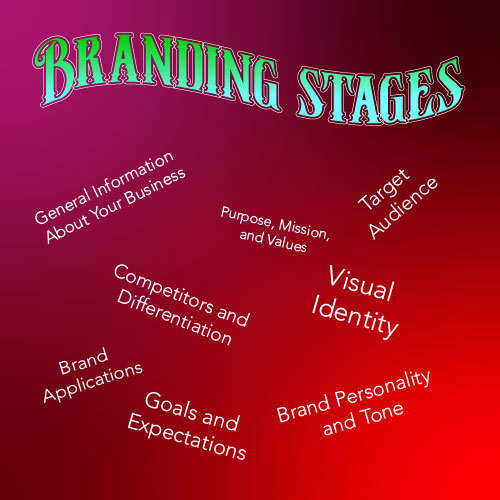
1. General Information About Your Business
This section allows the designer to understand the context of your brand:
Brand Name: Specify the exact name you will use.
Industry: For example, fashion, technology, health, etc.
Brand History: Include details such as the origin of the business and its evolution.
Location: Whether your target market is local or global.
2. Purpose, Mission, and Values
Defining the “why” and “how” of your business helps guide the design:
Purpose: What problem does your brand solve?
Mission: Describe how your business achieves its purpose.
Values: List the principles that represent your brand (e.g., innovation, sustainability, inclusivity).
3. Target Audience
An effective brand must connect with its audience. Provide details about:
Demographics: Age, gender, geographic location.
Psychographics: Interests, behaviours, and values.
Problems and Needs: What is your audience seeking to solve by choosing your brand?
4. Competitors and Differentiation
Identifying your competitors and what makes you unique is vital for successful branding:
Competitor Analysis: List your main competitors and their strengths/weaknesses.
Unique Value Proposition (UVP): Explain what sets you apart and why customers should choose you.
5. Brand Personality and Tone
Your brand should have its own voice:
Key Adjectives: Define your brand in 3-5 words (e.g., elegant, approachable, disruptive).
Communication Tone: Formal, friendly, professional, etc.
Inspirations: Mention brands whose tone you admire.
6. Visual Identity
This section guides the design of your identity:
Preferred and Avoided Colours: If you have specific palettes in mind.
Visual Style: Minimalist, classic, modern, etc.
Visual References: Include examples of designs you like.
7. Brand Applications
Specify how the brand will be used:
Required Materials: Logo, business cards, packaging, etc.
Platforms: Social media, website, printed materials.
8. Goals and Expectations
Clearly state what you hope to achieve with the branding:
Objectives: Brand recognition, increased sales, customer acquisition.
Timeline: Deadlines for receiving proposals and approvals.
Budget: Estimated range for the project.
Sample Questionnaire for Your Branding Brief
Copy and paste these questions to simplify the creation of your brief:
What is your brand name?
What industry does your business operate in?
Briefly describe your brand’s history.
What is the primary purpose of your business?
What is your mission, and what are your values?
Who is your target audience?
Age, gender, location.
Interests and needs.
Who are your main competitors?
What makes your brand unique?
Describe your brand’s personality in 3-5 words.
What colours, fonts, or visual styles do you prefer?
Where do you plan to use your brand identity?
What are your goals for this project?
What is your budget and estimated timeline?
We can also listen to another very interesting point of view as explained by Philip VanDusen in his video, to have another point of view.
We’d love to partner with you to bring your vision to life. Let’s create a unique, compelling brand together—contact us to get started!


